
Some stories don’t begin with romance.
They begin with stillness.
A closed heart.
A guarded life.
A person who has learned to survive—but not quite to feel.
Again and again, across literature and film, art enters stories not as decoration, but as lifeblood. Creativity awakens what grief, fear, routine, or loss has pushed aside. It restores wonder. It creates connection. And, often, it makes love possible.
That truth sits at the heart of so many beloved romantic stories—including one very dear to me.
When Art Opens the Door to Trust: Sculpted Chance
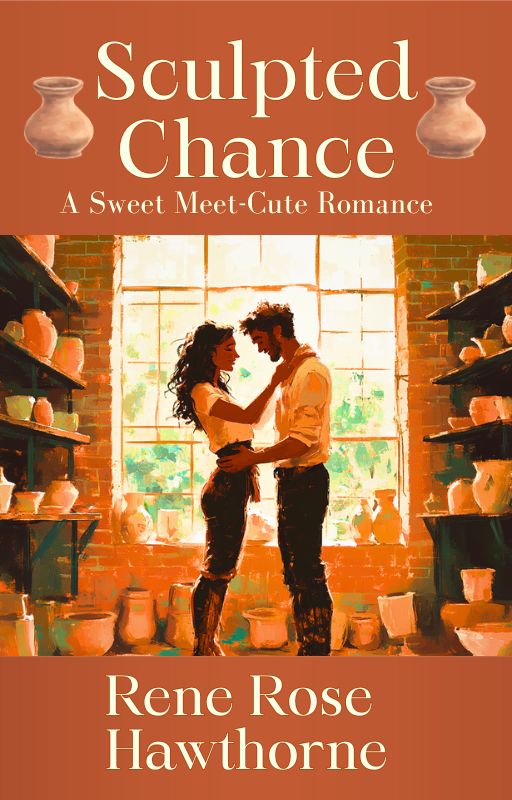
In my short romance Sculpted Chance, a businessman falls in love with a sculptor—but the romance itself isn’t the first transformation.
At the beginning of the story, he is emotionally restrained, cautious from past wounds, and structured by a world where control equals safety. Art unsettles him. It doesn’t demand; it invites. Through the sculptor’s work—and through watching creation happen—he begins to remember something long buried: the instinct to imagine, to feel, to create.
As he slowly discovers that he may be an artist himself after all, love becomes possible not because someone persuades him to trust—but because creativity teaches him how.
Art doesn’t fix him.
It reintroduces him to himself.
That same pattern echoes through many of our most enduring romantic stories.
Beauty as Awakening: A Room with a View
E. M. Forster’s A Room with a View is, at its core, a story about beauty breaking through polite suffocation.
Lucy Honeychurch lives by expectation—social rules, proper matches, appropriate feeling. Art, music, travel, and the sensory richness of Italy awaken something in her that cannot be tucked neatly back into place. Beauty forces her to notice her own heart.
Art in Forster’s novel isn’t loud or dramatic. It’s atmospheric—architecture, landscapes, music, the quiet permission to feel deeply. And that permission changes everything.
Like the hero in Sculpted Chance, Lucy doesn’t gain courage through argument or logic. She gains it through experience. Through beauty. Through attention.
Art teaches her that a life without passion is not safety—it’s absence.
Creation as Connection: Ghost
Few films capture the intimacy of creation as memorably as Ghost (1990).
The pottery scene is iconic not merely because it is romantic, but because it shows art as shared vulnerability. Hands shaping clay together become a language beyond words. Trust is built not through promises, but through presence. Creativity becomes communion.
Even after loss, art remains the bridge—between love and grief, memory and hope, the seen and the unseen. Creation holds what cannot be held any other way.
In Ghost, art doesn’t erase pain. It gives pain somewhere to go.
Why Romance Needs Art
Romance thrives when characters are becoming more fully themselves.
Art—whether sculpting, music, architecture, cooking, writing, or simple acts of creativity—signals growth. It slows characters down. It invites attention. It allows transformation without speeches or declarations.
Art lets love arrive naturally, because the heart has already been opened.
That is why creative acts appear again and again in romantic storytelling. They are believable catalysts. They show change rather than announce it. And they remind us that love is not something we manufacture—it’s something we make room for.
An Invitation
Whether you are a reader, a writer, or simply someone who has forgotten the quiet joy of making something beautiful, stories remind us of this:
Art is not a luxury.
It is lifeblood.
It restores hearts.
It opens stories.
And sometimes, it teaches us how to love again.
Writing Prompts & Craft Tips for Romance Authors

Writing Prompts
- Write a meet-cute where the first real connection happens through a shared creative moment—not conversation.
- Give a guarded character an artistic instinct they’ve denied. What awakens it?
- Write a scene where hands create something together—food, art, repairs. What emotions surface?
- Let art be the reason a character finally speaks the truth.
- What happens when a character’s creative work is misunderstood—and how does love respond?
Craft Tips
- Use art as action, not exposition
- Let creativity reveal vulnerability
- Tie creative acts to emotional turning points
- Avoid perfection—art works best when messy and human
If you liked this post, you might like Sculpted Chance or other stories in my Artisan Romance Series.
 Rene (Rose) Hawthorne