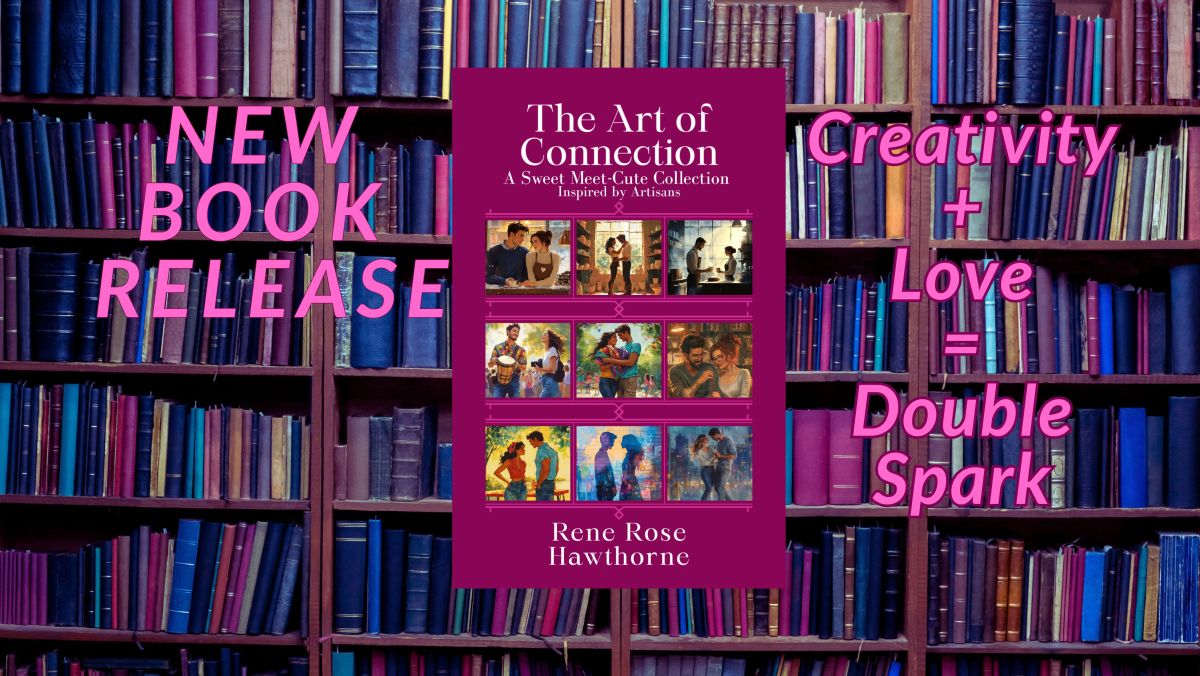
Writing romance is, at its heart, about creating connection.
While working on my newest series of short stories, I discovered something surprising: writing about artists and artisans naturally lent itself to writing about love. Artists create something new with their hands, minds, and hearts. When two people fall in love, they’re also creating something new — a creative connection between them as they learn each other’s rhythms and dreams.
At first, this wasn’t intentional. I wrote a handful of stories about people meeting and falling in love, and only later did I notice the theme running through them. My first short story in this series was Rain Check, where Lena and Adrian meet by chance under a café awning in the rain. At that point, I didn’t think of them as artists at all. But when I wrote their sequel, The Art of Rain, art became part of their relationship — and I loved seeing how creativity deepened their bond.
From there, more stories followed: painters, potters, woodworkers, hobby sketchers, and people who didn’t think of themselves as artists until someone they loved noticed the spark in them. Some were full-time creatives, others made art after their day jobs, but they all shared a desire to make something meaningful — and through that, to build connection.
Writing Romance is, at its heart, about creating connection.
Rene Rose Hawthorne
Finding Romance (and Comfort) as a Reader
A small confession: romance wasn’t the first genre I ever wrote. For years I focused on fantasy and science fiction — adventures filled with quests, friendships, and battles between light and dark. I enjoyed stories where connection came through courage and loyalty, but I hesitated to write about romantic love.
Then a season of health challenges left me craving books that felt like refuge. I re-read favorite fantasy and sci-fi novels, yet longed for stories that wrapped courage in tenderness — stories about affection and hope.
Because I’m an author, many of my friends are authors too. Some live nearby; others I’ve met online. During that season, I stumbled across a romance by a friend, and I loved it. Soon I was exploring collections and anthologies, discovering how much variety romance holds.
One of my favorite discoveries was Melanie Cellier, whose fantasy romances for young adults are sweet and adventurous — always “clean,” with only kisses. I also enjoy Jemi Fraser, who writes romantic suspense with open-door scenes. Her stories mix intrigue and tenderness, with intimate moments written to serve the developing relationship rather than overshadow it. These authors couldn’t be more different, yet both write stories where connection matters, where characters risk vulnerability for love.
Their books taught me that romance doesn’t have to fit one mold. It can be sweet or sensual, fantastical or suspenseful — but at its core, it celebrates the wonder of finding someone who sees you.
Creativity + Love = A Double Spark
Romance already asks us to notice the beauty in another person. Adding creativity doubles that spark. When two artists fall in love — or when one character helps another rediscover creativity — the relationship gains an extra layer of discovery. They see each other not only as companions but as makers, people willing to shape beauty together.
Creativty + Love = A Double Spark
Rene Rose Hawthorne
That’s what I enjoy exploring in my own stories. A carpenter falling for someone who bakes warm breads. A dancer meeting a poet at a summer camp. Or Lena and Adrian in Rain Check and The Art of Rain, whose love begins in a storm and grows through shared art:
“They stood watching the rain together, the steady percussion creating a private world beneath the awning.” — Rain Check
“His fingers hovered over the misty wash, tracing the air where raindrops had bled the colors together.” — The Art of Rain
In these scenes, connection is an art form in itself.
Encouragement for Writers (and Readers)
If you’re a writer, think about pairing creativity with romance:
- Give one character an artistic passion and let another person admire it.
- Use shared projects as natural settings for conversation and subtle intimacy.
- Allow love to grow in quiet moments — sketching, glazing pottery, framing photos — as well as in dramatic ones.
If you’re a reader, notice how creativity shows up in your favorite romances. Does a character’s craft make them brave, tender, or attentive? How does art draw people together?
And for anyone — writer, reader, or simply someone seeking delight — I encourage you to look at your own connections through a creative lens. Maybe try a new hobby with someone you care about. Watch how collaboration deepens affection.
A Final Thought
Romance, whether whispered through rain-damp dialogue or painted across a canvas, is about seeing and being seen. It’s about crafting something beautiful together — a life, a memory, a moment worth savoring.
That’s why I write about artists falling in love: their work mirrors the very act of forming a relationship. Both require imagination, courage, and heart.
Connection is an art form in itself.
Rene Rose Hawthorne
So if you’re searching for stories filled with warmth, creativity, and hopeful connection, I invite you to dip into The Art of Connection. And if you’re a writer, maybe let the next shower — or a new sketchbook, camera, or lump of clay — remind you that love, like art, begins with curiosity and grows when we dare to create.
🌧️ Stay Connected
💧 Did this post resonate with you?
💧 Want to keep exploring creativity, connection, and heartwarming stories?
💧 Curious about new essays (and a future nonfiction book) celebrating the art of love and storytelling?
Subscribe to my blog so you’ll be the first to read new reflections, writing tips, and behind-the-scenes peeks at my writing. There’s a handy “subscribe” box at the top and the bottom of this page.
Find out more about The Art of Connection at this webpage about it, or go to this Amazon link.
Let’s keep savoring stories, creativity, and the small, beautiful connections that make life — and fiction — shine.
 Rene (Rose) Hawthorne